
Thoughts on Parashat Balak 5785
 The main theme of our Torah portion is the story of Balak, the king of Moab, who summons the prophet Balaam to curse the people of Israel. Three times, from three different vantage points, Balaam attempts to pronounce his curses; each time, blessings are issued forth instead. One of reasons Balaam brings to justify his inability to curse the Jewish people says the following:
How can I damn whom God has not damned,
How doom when יהוה has not doomed?
As I see them from the mountain tops,
Gaze on them from the heights,
There is a people that dwells apart,
Not reckoned among the nations
(Number 23:8-9)
Balaam was correct in defining one important part of our religious/national identity: am levadad yishkon – “a people that dwells apart”. It is an unavoidable, practical consequence of our call to be distinct. This concept by itself can generate both a blessing and a curse. Let me first elaborate on the latter and then on the former.
Many universalistic/collectivistic ideologies and traditions may already have an issue with that simple idea. Don’t get me wrong: I’m not saying that this is something in Judaism that justifies or, let alone, causes antisemitism – that’s a terribly wrong way of understanding it (and obviously it’s antisemitic since every claim that Jews themselves or something in Judaism is to blame for antisemitism is antisemitic by definition.) I am also not ignoring the fact that many other nations and religious groups think of themselves as unique, chosen or even better than others. They absolutely do. My point is that having our distinctiveness so many times stressed in our foundational, Holy writings and having this concept at the very core of our religious and national identity may, by itself, invite questioning it, questioning that is not always done in good faith.
There are important, essential reasons for our distinctiveness. One of the most fundamental of them is that we had to become distinct, separate and unique in order to bring a change to the human world. And this is a blessing for us and the world around us (despite the fact that they are often not aware of it.) What was around us – the culture of antiquity, including the moral and political culture – was fundamentally unacceptable for our leaders, our people, due to being deeply incompatible with our conscience and sensitivity. I would say that most likely people of other traditions – at least some of them – perceived the socio-cultural status quo this way as well; we, however, had a chutzpah to challenge it, to speak against it and live according to different, better standards. That kind of approach always creates a response, often demeaning or hostile.
To reiterate my point: the idea of being distinct, unique, deeply engraved in our Jewish identity invites an asymmetrical conversation with people representing other religious or ethnic groups. Thus, at this very outset things can go either the right way or the wrong way. The right way is when our conversation invites more questions and sparks unprejudiced or simply positive interest in us as a nation and religious tradition. The wrong way is when this initial questioning evolves into hostility, disdain and finally – hate. Yes, it’s pretty common that people are prejudiced, know everything better and there is no point in talking with them. But there are millions of people among all peoples that support us, respect us or even adore us. Let’s take good care of our relationships with them because it is actually our fundamental mission as people. Therefore, my message today is the following. Firstly, our relationships with other peoples and identity groups have been and always will be asymmetrical, which can make us behave defensively, which is wrong, always wrong. We have to be aware of that whenever we face a difficult conversation or relationship with someone who has a problem with us, as people or with the Jewish state. Therefore, we shall always proudly stand up for ourselves, our nation and our tradition and not let others define the place we are speaking from. We should always, consciously choose this place, which sometimes means taking a deep breath and having a considerate, by no means impulsive and emotional response. On the other hand – and this is a second part of my message today – things are not as bad as it may seem from the news, media, social media etc. We still have a lot of good, genuine friends in the non-Jewish world. And things WILL get better – the leadership of the State of Israel together with our brave soldiers armed with outstanding technology and with the cooperation with the US managed to decimate nearly all of our Middle-Eastern enemies, neutralizing an enormous amount of external threats. The perception of us will change and I firmly believe that it will improve as the time goes. People have a short memory; in a year or two many of them won’t remember why they took the side of those opposing us. And this is the space for our involvement and action: let’s be proudly Jewish and always serve as a good example for others, no matter their identity.
Shabbat shalom!
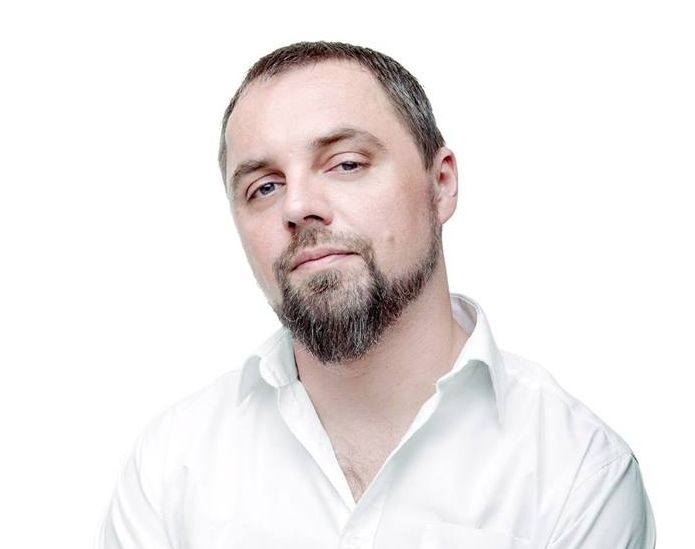
Rabbi Mirski
Leave a Reply