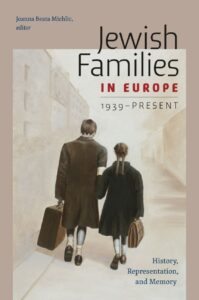
In this talk, Dr. Michlic discusses a crucial shift in the process of memorialization of the Holocaust in post-communist Eastern Europe that has occurred around the year of 2010. Despite its limitations, the 1989 – early 2000s liberal phase of memorialization of the Holocaust in postcommunist Europe was conducive to the emergence for the first time of critical history writing about the Holocaust, driven by local Jewish and non-Jewish senior and junior scholars living in their respective homelands or abroad. It also resulted in highly emotionally charged public and historical debates, such as the well-known international Polish debate of 2000 – 2002, about the Jedwabne massacre of 10 July 1941, which aimed at coming to terms with the difficult history of the treatment of the Jewish minority during the Holocaust. However, by the beginning of the second decade of the twenty-first century, troubling undercurrents of the memorialization of the Holocaust, with continuing antisemitic-based prejudices towards Jewish victims and Jewish survivors, have exploded and ascended forcefully. As a result, the memorialization of the Holocaust has been subjected to instrumentalization, abuses, and attacks from a wide range of social, cultural, and political actors as never before. This talk explores the post-2010 shifts in approaches and their cultural significance.
To Make Everyone Happy
Thoughts for Shabbat Sukkot 5786
Chag Sameach and Shabbat Shalom everyone. Sukkot is considered the most joyous of Jewish holidays. One of its biblical names is Z’man Simchateinu – “The time of our rejoicing”. It is actually our religious obligation to be happy on every day of Sukkot. And the best way, I believe, to achieve this goal is to please other people – your wife, husband, your children, parents, namely, everyone in your family and – best case scenario – everyone in your community.[…]
Sons of Survivors
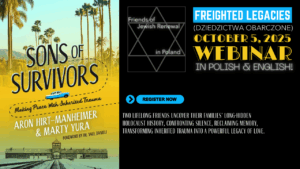
The authors of this dual memoir did not live through the trauma of the Holocaust; they inherited it. Whether their survivor parents revealed what they endured or erected barriers of silence, the horrors they experienced permeated the lives of their children. The arrival of their book opens a door not only to their friendship and their pasts but it also invites other “sons and daughters of survivors.”
A Message of Hope in Turbulent Times
Thoughts on Parashat Nitzavim 5785
“You stand this day, all of you, before your God יהוה —your tribal heads, your elders, and your officials, every householder in Israel, your children, your wives, even the stranger within your camp, from woodchopper to waterdrawer —to enter into the covenant of your God יהוה […] (Deuteronomy 29:9-11)
These words, spoken by Moses to the Israelites on the cusp of entering the Promised Land, echo across centuries to us, a small but vibrant Jewish community reborn in the heart of Poland. We live in unprecedented times, a world bursting with possibilities—technological marvels, global connections, and opportunities for renewal. Yet, these days are also turbulent, marked by civilizational and social tensions, from rising populism to global conflicts and the lingering shadows of antisemitism. The history of Polish Jews is a history of resilience and revival, and it infuses the message of parashat Nitzavim with hope, urging us to embrace our role in shaping a brighter future for ourselves, our people, and all humanity as we approach the High Holy Days.[…]
- « Previous Page
- 1
- …
- 4
- 5
- 6
- 7
- 8
- …
- 222
- Next Page »