Thoughts on Parashat Miketz, 5786

Rabbi Menachem Mirski
There are moments in your life that are irrelevant in terms of their influence on your life journey in general. In these moments you are temporarily allowed to give up a lot of your power, even control over yourself, especially if you know that someone you love is around and will not only not betray you but will take care of you the best way she or he can. There are also moments that are pivotal for you and whatever you do or whatever decision you make at this particular moment will determine the path of the rest of your life. And because we are never certain if the moment we live through at this moment is crucial or not, some say that we need to stay vigilant. Every day and the entire time, and that minimizes the risk of failure of any kind. And strengthens our relation with God.
We encounter Joseph at one of the pivotal moments in his life in this week’s Parasha. At this point Joseph is a Hebrew slave turned prisoner who suddenly ascends to the heights of Egyptian power. Pharaoh, troubled by dreams of fat and gaunt cows, summons Joseph from the dungeon. With divine insight, Joseph interprets the visions as harbingers of abundance followed by famine. Impressed, Pharaoh appoints him viceroy, adorning him with fine linen, a gold chain, and the Egyptian name Zaphenath-Paneah. Joseph shaves his beard, dons Egyptian attire, and marries the daughter of a priest. Yet, beneath this assimilated exterior, Joseph remains profoundly an Israelite: he attributes his wisdom to God, names his sons in ways that reflect his Hebrew heritage—Manasseh, “for God has made me forget all my hardship,” and Ephraim, “for God has made me fruitful in the land of my affliction”—and later reveals his identity to his brothers with tears of reconciliation.
This tension between power and identity lies at the heart of the parasha. Joseph wields immense authority in a foreign land, adopting its customs to thrive, yet he never fully surrenders his core self. He balances assimilation—necessary for survival and influence—with authenticity, ensuring his actions align with his values. This narrative challenges us, not only in terms of our ethnic or religious identity but simply our fundamental, individual human level: How do we navigate worlds that demand conformity while preserving what makes us unique?
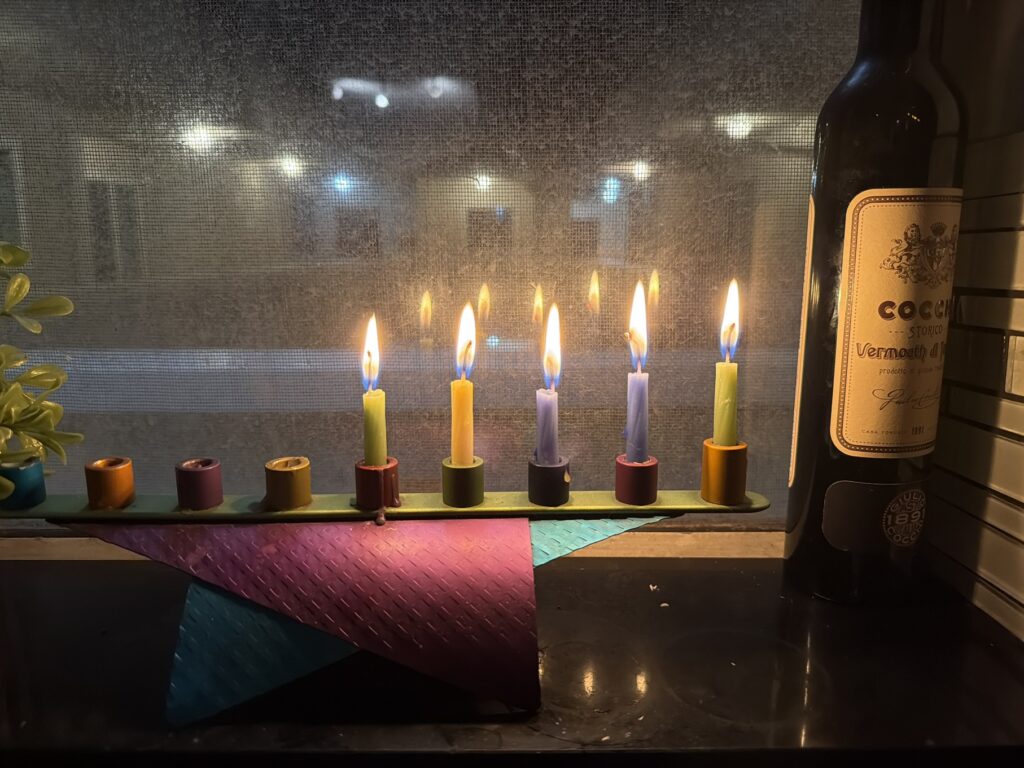
As we light the Chanukah candles this week—midway through the festival—we find a resonant parallel in the story of the Maccabees. The Maccabean revolt, commemorated in Chanukah, is often simplified as a clash between Jewish purity and Greek corruption. But the historical reality is more nuanced. The Hasmoneans, including the Maccabees, were not isolated traditionalists rejecting all Hellenistic influence. Judea under Seleucid rule had already absorbed elements of Greek culture: gymnasiums, philosophical discourse, and administrative systems. Some Jews, like the Hellenizers in Jerusalem, went too far, embracing idolatry and abandoning mitzvot. Yet the Maccabees themselves were, in a way, assimilated and assimilating. They selectively adopted what was beneficial from Greek society—military tactics, perhaps even some aspects of governance—while fiercely defending Jewish sovereignty and religious practice.
Consider Mattathias and his sons: They fought not just against Antiochus IV’s decrees banning circumcision and Shabbat observance, but also against internal assimilation that eroded Jewish identity. However, after their victory, the Hasmoneans didn’t purge all Greek elements; they minted coins with Greek inscriptions alongside Hebrew, and John Hyrcanus expanded the kingdom using Hellenistic-style alliances. This selective integration echoes Joseph’s approach: picking up what was good in the surrounding culture—strategic planning, diplomacy—and implementing it in service of Jewish continuity. The miracle of the oil, lasting eight days, symbolizes not rejection but resilience: a small amount of pure oil is sufficient to overcome and nullify impurities – just as Joseph’s unwavering faith was sufficient amidst the splendor of Egypt.
Parashat Miketz and Chanukah remind us that assimilation isn’t binary; it’s a dance. True power emerges not from erasure but from synthesis: adopting the best of the world while anchoring in our tradition. In America’s melting pot, where Jews thrive yet face erasure through intermarriage rates hovering at 50% or subtle workplace biases, this balance is vital. The Jewish life in Poland emerges precisely from the same fact: intermarriage – that’s the context in which the majority of Polish Jews have their generational background. Like Joseph’s granaries sustaining Egypt, our integrated identities can nourish society. And like the Maccabean flame, they endure, proving that authenticity, when wielded wisely, outshines any darkness.
As we conclude, let us reflect: In what ways are we Josephs or Maccabees today? May we draw strength from their examples, channeling power to affirm our Jewish souls, wherever we live in the world now.
Chag Chanukah Sameach—may your lights burn bright.
Shabbat shalom,
Rabbi Mirski
The Rabbi Mirski Show on Youtube:

Dive into the world of Judaism and the stories that shape our lives with Rabbi Mirski. From faith and tradition to the latest in politics, each episode challenges, inspires, and sparks conversation you won’t want to miss!

https://www.youtube.com/@therabbimirskishow
Leave a Reply